
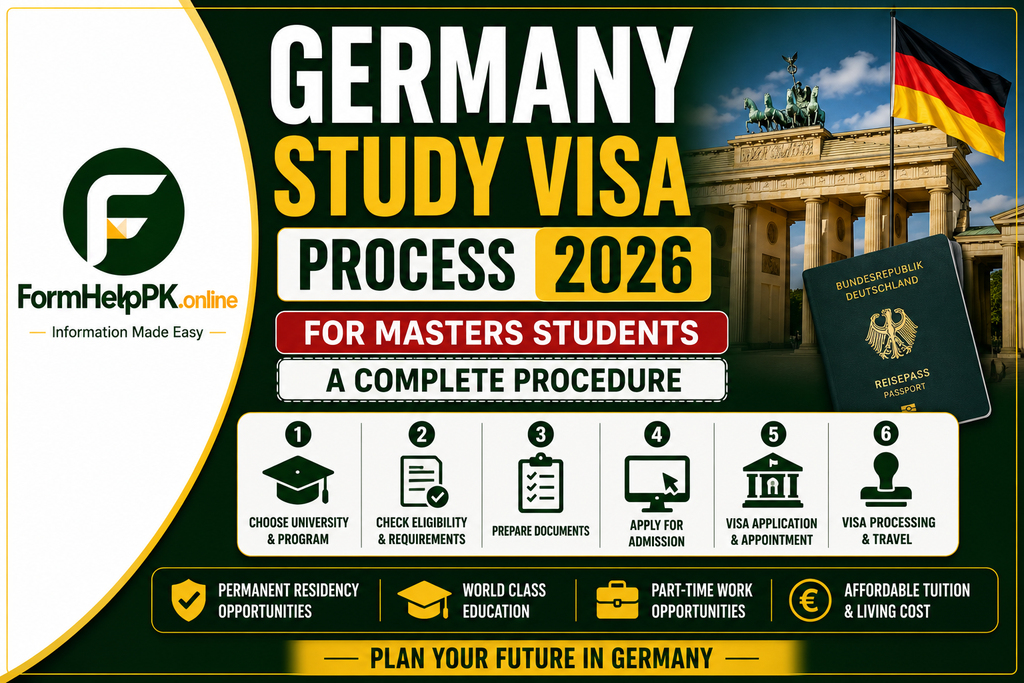
Germany Study Visa Process 2026 has become one of the top choices for students pursuing a masters degree abroad, and it’s not hard to see why. Public universities charge little to no tuition, the degrees carry serious global weight, and the job market afterward is genuinely strong, especially in engineering, IT, and business. But before any of that, there’s one hurdle every non-EU student has to clear first: the German student visa. If the process feels intimidating, you’re not alone. Between blocked accounts, APS certificates, and embassy-specific checklists, it’s easy to get lost. Here’s a clear breakdown of how it actually works.
Do You Even Need Germany Study Visa Process 2026?
It depends on your nationality. If you’re from the EU, EEA, or Switzerland, you can study in Germany without a visa at all. Citizens of a handful of other countries the US, Canada, Australia, New Zealand, Japan, and South Korea, among them can enter visa-free and apply for a residence permit after arriving. Everyone else, including applicants from India, Pakistan, Bangladesh, Nigeria, and China, needs to secure a National Visa from the German embassy or consulate in their home country before traveling. And a quick but important warning: a Schengen tourist visa will not let you study in Germany, even if you’re only planning to attend classes for a short period.
The Three Visa Types Worth Knowing
There are some types which is given below with proper details:
- Student Visa for those who already hold an official admission letter from a German university.
- Student Applicant Visa for those who haven’t been formally accepted yet but need to travel to Germany to sit entrance exams or attend interviews.
- German Language Course Visa for students planning to complete an intensive language course before their degree begins, without immediate plans for further study.
how to apply for Germany study visa
If you are interested to get admission and Visa successfully you have to follow some officially introduce steps:
- First of all you have to secured your admission in German university
- After that the step is gather your core documents are completed with application form
- Then you have to prove you can financially support like you have to make your blocked account bank statement
- You have to get health insurance in German
- You have to book your visa appointment and attend the interview for Visa verifying and process application
- You have to pay the fee of visa around 75$
After You Arrive
Once you land in Germany, your work isn’t quite done. You typically need to register your address, finalize your health insurance, and convert your visa into a residence permit through your local Immigration Office. If you complete your degree successfully, Germany allows you to extend your residence permit for up to 18 months to search for a job related to your field of study a genuinely valuable benefit compared to many other study-abroad destinations.
Common Mistakes to Avoid
- Applying too close to your intended start date, leaving no cushion for delays
- Underestimating how long the APS process takes, if applicable to your country
- Submitting a blocked account with the wrong amount or from an unrecognized provider
- Ignoring the specific document checklist from your embassy and instead relying on generic online lists
- Treating the German language interview questions as optional preparation
Final Word
The German student visa process has a reputation for being bureaucratic, and to some extent, that’s fair. But it’s also predictable once you understand the sequence admission first, then documents, financial proof, health insurance, and the embassy appointment. Start early, follow your specific embassy’s checklist rather than a generic one, and you avoid the vast majority of delays that trip other applicants up.
FAQs
How long does the Germany student visa take to process?
Processing times vary by embassy and country, but generally range from around 25 days to as long as 12 weeks during busier periods. It’s best to apply four to six months before your intended start date to avoid last-minute issues.
How much money do I need to show for a Germany student visa?
You need to prove access to roughly €11,904 per year in living expenses, most commonly through a blocked account. Other accepted options include a scholarship or a formal financial guarantee from a sponsor in Germany.
Is IELTS mandatory for a Germany student visa?
Not, IELTS is one accepted way to prove English proficiency, but many universities also accept TOEFL iBT. If your program is taught in German, you instead need a certificate like TestDaF or the Goethe-Zertifikat.
Can I study in Germany without knowing German?
Yes, many master programs are taught entirely in English. That said embassies often ask basic conversational German questions during the visa interview, and daily life outside major cities is easier with at least some German.
What happens after I finish my master’s degree in Germany?
Graduates can extend their residence permit for up to 18 months to search for a job related to their field of study, giving you a real runway to transition from student to skilled worker status.
- Marriage Certificate in Pakistan 2026 | Nikah Nama and NADRA Registration Guide
- Pakistan Passport Renewal 2026 | Online Appointment and Complete Process Guide
- Birth Certificate Registration in Pakistan 2026 | NADRA and Union Council Process
- Germany Study Visa Process 2026 – for Masters Students | A Complete Procedure
- Income Tax Rules 2002 PDF Pakistan | The Rules Cover